Pass the Turkey, Not the Lecture: A Holiday Script for Your Adaptogen Skeptic
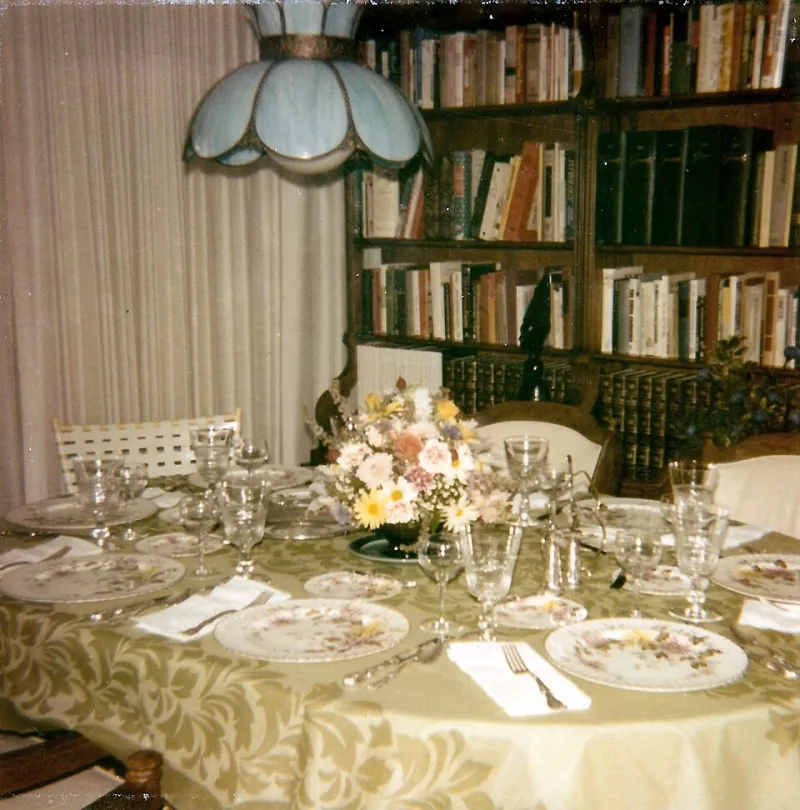
Photo: Per source. Please credit "Family photos of Infrogmation"., CC BY-SA 4.0, via Wikimedia Commons
Thanksgiving 2026 lands on Nov. 26, which means many of us are about to spend a long afternoon within arm's reach of a relative who has opinions. About your job. Your cooking. Your dog's diet. And now, apparently, the small bottle of ashwagandha in your kitchen cabinet.
Here at AshwaJalajit, we are not in the business of turning dinner into a research seminar. You do not need to defend your supplement routine to anyone between the mashed potatoes and the pie. But you also do not need to spend the entire meal feeling ambushed. The goal is simple: stay calm, stay honest, and keep the conversation from becoming a courtroom.
Start with the plate, not the PubMed abstract
If someone asks what you are taking, answer in one sentence. Not three. Not a paragraph with citations.
Try: 'It is an Ayurvedic herb I take for stress support. I am not here to convert anyone.'
That sentence does three useful things. It names the thing, it states your reason, and it closes the conversion door before anyone can slide a pamphlet through it. If the relative is genuinely curious, they will ask a follow-up. If they are just winding up for a lecture, you have given them very little to grab onto.
The three questions you will probably hear
Most skeptical relatives arrive with a small rotating set of questions. You can prepare for them without memorizing studies.
'What is that stuff anyway?'
Keep it plain. Ashwagandha is an Ayurvedic herb traditionally used for stress and sleep support. Shilajit is a mineral-rich resin used in Ayurvedic traditions. Neither is a magic bean. Neither is a prescription drug. You take them because you decided they fit your routine, not because a guru in a robe knocked on your door.
'Does it actually work?'
This is where you separate your experience from the evidence. Say something like: 'My experience is mine. The research on ashwagandha is promising in some areas but not settled, and shilajit has less human research. I am not claiming it cures anything.'
That answer is honest, and it usually takes the wind out of a gotcha question. You are not pretending a supplement is a proven cure. You are also not pretending your personal experience is worthless.
'You know supplements are not FDA-approved, right?'
This one is often asked as a trump card. You can answer without getting defensive: 'Right. The FDA does not approve supplements the way it approves drugs. That is why I look for third-party testing and talk to my doctor about interactions.'
Then stop. You do not need to deliver a short course on DSHEA, label claims, or the difference between structure-function claims and disease claims. Unless, of course, the relative is a pharmacist and genuinely wants to talk shop. Even then, Thanksgiving is a terrible venue for a journal club.
Separate your story from the science
One of the fastest ways to lose a holiday argument is to say 'it worked for me' as if that settles the question. Personal experience is real, but it is not clinical evidence. The reverse is also true: a mixed study does not mean your experience is fake.
A clean way to phrase it is: 'I noticed I felt different, but I am not using that as proof for anyone else.' That keeps you out of the trap of defending a universal claim. You are reporting your own life, not writing a label.
If someone pushes for studies, do not cite them from memory at the table. Offer to send a link later. Nine times out of ten, the conversation ends there. The tenth time, you have just bought yourself a graceful exit.
Boundaries are not rude
The moment a conversation stops being curious and starts being mocking, you are allowed to stop participating. You do not owe anyone a debate just because you share a last name.
Watch for the signs: voices rising, the same point repeated three times, someone talking over you, or a relative making jokes about you being in a cult. A little teasing is one thing. Contempt is another.
Useful exit lines:
- 'I would rather not debate this at dinner. Want more cranberry sauce?'
- 'I hear you. I am not going to change your mind tonight, and that is okay.'
- 'I am happy to send you information tomorrow. Let's enjoy the meal.'
- 'That is a fair question, but I am not going to get into my health details at the table.'
You can say these with a smile. You can also say them without one. Politeness is not the same as unlimited access to your personal choices.
The cult test, with humor and limits
If someone says you have joined a cult, you can use humor once: 'Cults usually have better merch and mandatory meetings. I take a capsule and forget about it.'
But do not let the joke become the whole response. A calm follow-up helps: 'No one recruited me. I read about it, tried it, and made my own decision. I am not asking you to take it.'
That is usually enough. If it is not, return to the boundary. You are not required to prove you are not in a cult by submitting to an interrogation.
Keep the safety note short and real
If a relative has a medical condition or takes medication, do not play doctor. Say: 'I am not the right person to advise you. If you are curious, talk to your clinician, especially about interactions.'
That is especially important with ashwagandha and shilajit. Pregnancy, thyroid conditions, autoimmune conditions, liver concerns, and prescription medications are all reasons to get actual medical advice. A holiday table is not a pharmacy counter.
The takeaway
You do not need to win Thanksgiving. You need to get through it with your relationships and your nervous system mostly intact. Prepare two sentences, one boundary, and one exit line. Then pass the turkey. If the conversation turns, let it turn. The cranberry sauce does not need a clinical trial.