Before There Were Clinical Trials, There Was Charaka: What Ancient Ayurvedic Texts Actually Say About Dosing
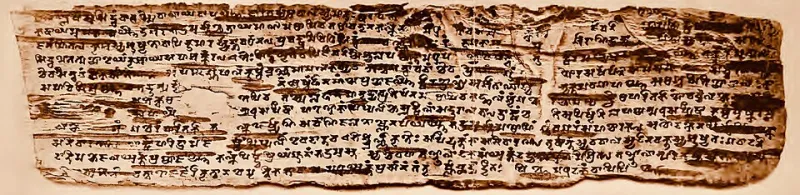
Photo: Ms Sarah Welch, CC BY-SA 4.0, via Wikimedia Commons
We live in an era where a supplement needs a randomized controlled trial and a statistical significance threshold before anyone takes it seriously. Fair enough — that rigor has saved a lot of lives.
But here's a thought experiment: the physicians who first wrote about ashwagandha and shilajit didn't have labs, placebos, or peer review. They had roughly two thousand years of observation, careful documentation, and an obsession with individual variation that modern medicine is only now rediscovering. And what they wrote about dosing is surprisingly sophisticated.
The Classical Texts Weren't Vague — They Were Specific
When people imagine ancient remedies, they picture vague pronouncements: "take some root, feel better." The Charaka Samhita and Sushruta Samhita — foundational Ayurvedic texts compiled somewhere around the first few centuries CE — are nothing like that.
These texts classify substances, specify preparation methods, list contraindications, and — critically — tie dosing to the individual. A person's constitution (prakriti), their digestive strength (agni), their age, the season, even the time of day all shaped the recommendation. A frail, anxious patient with weak digestion got a different protocol than a robust laborer with the same complaint.
Sound familiar? It should. That's essentially personalized medicine, arrived at through observation instead of biostatistics.
Ashwagandha: The 'Strength of the Stallion' Had Rules
Ashwagandha appears in classical texts as a rasayana — a rejuvenative, not a quick fix. And the dosing guidance reflects that.
Classical preparations often involved milk decoctions, ghee, or honey as carriers (called anupana), chosen deliberately to direct the herb's effects and buffer its potency. The texts frequently recommended building up gradually rather than starting at a full dose, and taking it with warming, nourishing foods. Nighttime dosing with warm milk was common for sleep and vitality — which, given modern research on ashwagandha's calming effects, reads less like folklore and more like an early clinical observation.
The texts also flagged cautions: pregnancy got explicit warnings, and certain conditions called for avoidance or modification. Two thousand years ago, they were already writing the ancient equivalent of "ask your doctor."
Shilajit: Purified, Purified, Purified
If the classical texts repeat one instruction about shilajit, it's this: never take it raw.
Ancient Ayurvedic physicians understood that the mineral resin oozing from Himalayan rock needed shodhana — a purification process involving repeated washing, filtering, and processing, often with decoctions of other herbs. Unpurified shilajit was explicitly warned against. The texts treat proper processing not as optional but as the entire ballgame.
Fast-forward to today, and the biggest safety issue with commercial shilajit is — you guessed it — contamination from unpurified or poorly sourced product. The ancients didn't have mass spectrometers, but they landed on the same conclusion: the source and the processing are everything.
Classical dosing for shilajit was also conservative — small quantities, often rice-grain-sized amounts, dissolved in warm water or milk, typically taken in cooler seasons and paired with specific foods to aid absorption.
Where Modern Science Agrees — and Where It Diverges
Here's where it gets interesting.
The agreements: Modern trials on ashwagandha consistently use standardized extracts in the range of 300–600 mg daily and find effects on stress, sleep, and cortisol — aligning with the texts' framing of ashwagandha as a calming, building herb best taken consistently over weeks, not as a stimulant. The nighttime-with-warm-milk tradition? Modern sleep research doesn't object. Shilajit's purification warning? Modern heavy-metal testing makes it the single most validated piece of ancient advice on the list.
The divergences: The classical system tied dosing to seasonal cycles and constitutional types — frameworks modern research hasn't tested and largely ignores. Modern trials also tend toward fixed doses for everyone, which is exactly the one-size-fits-all approach the ancient texts pushed against. And some classical combination preparations involve herbs that haven't been studied at all in controlled settings.
Neither system is complete without the other. The texts offer nuance and caution; modern trials offer standardization and proof. Together, they make a stronger case than either alone.
What the Old Physicians Got Right About 'Enough'
Maybe the most striking thread running through both classical Ayurveda and modern research is restraint. The texts warn against excess. The trials find benefits at moderate doses — not heroic ones. The wellness industry, meanwhile, keeps selling "more."
There's a quiet lesson there. The physicians writing on palm-leaf manuscripts two millennia ago, and the researchers running trials today, both landed in the same place: modest, consistent, well-matched dosing beats aggressive megadosing every time.
The more things change, as they say. Some wisdom just needed a couple thousand years and a placebo group to be confirmed.