A.M. or P.M.? I Ran a 30-Day Ashwagandha Timing Experiment So You Don't Have To
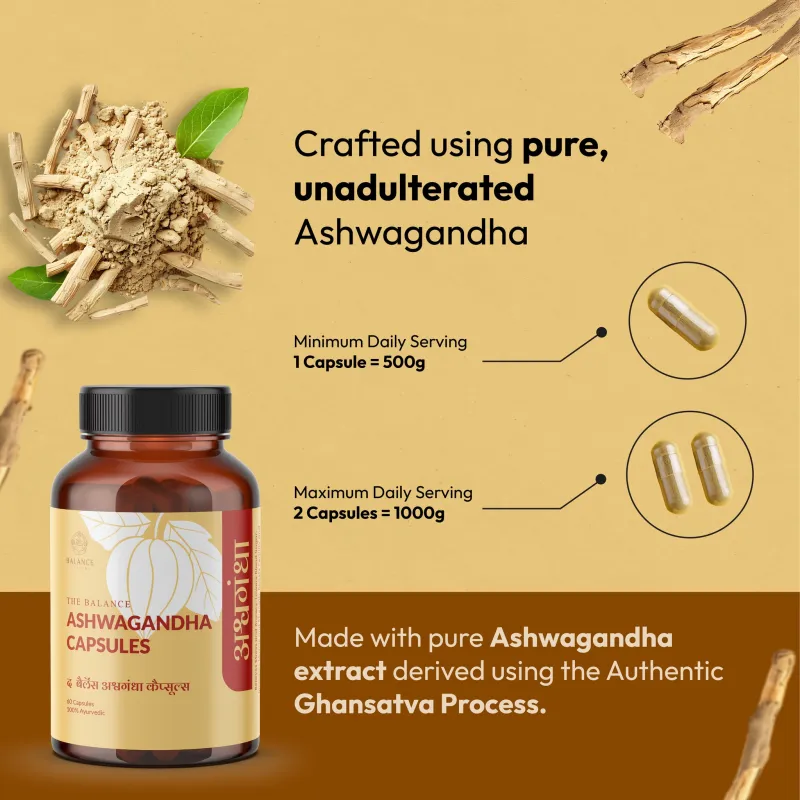
Photo: ashwagandha capsules morning coffee nightstand supplement routine, via balanceayurveda.in
Ask five people at your local yoga studio when they take ashwagandha and you'll probably get five different answers. Some swear by a morning capsule with their coffee. Others insist it belongs next to the melatonin on the nightstand.
So who's right? Honestly, it depends on what you're trying to get out of it — and the only way to know for sure is to test it on yourself. Here's a practical framework for a 30-day experiment, plus what the research actually suggests about timing, cortisol, and those adaptogenic claims you keep seeing on Instagram.
Why Timing Might Matter at All
Ashwagandha (Withania somnifera) is an adaptogen, meaning it's thought to help the body modulate its stress response. The star player here is cortisol — the hormone your adrenal glands release when you're stuck in traffic on the I-405 or staring down a work deadline.
Cortisol follows a natural rhythm: it spikes in the morning to wake you up, then tapers off through the day, hitting its lowest point around bedtime. The theory behind timing is that ashwagandha may help flatten unhealthy spikes. Take it in the morning, and you might take the edge off that early-day stress surge. Take it at night, and you may support the natural wind-down process instead.
Several clinical studies — many using the KSM-66 extract — have shown meaningful reductions in perceived stress and cortisol levels over 8 to 12 weeks. Notably, some of the most cited research administered doses in the evening, which is partly why nighttime dosing gets so much attention.
The 30-Day Framework: Split and Compare
Here's the experiment design we'd suggest, keeping it simple enough to actually stick with:
Weeks 1–2: Morning dosing. Take your serving with breakfast.
Weeks 3–4: Evening dosing. Take it 30–60 minutes before bed.
Before you start, jot down a baseline for a few days:
- Energy rating (1–10) at 10 a.m. and 4 p.m.
- Sleep quality — how long until you fall asleep, how often you wake up
- Stress score — one number for how frazzled the day felt
- A quick note on mood, focus, or anything unusual
Keep taking your ratings daily. Yes, it's low-tech. But patterns emerge fast when you write things down, and a simple notes app works fine.
A few ground rules: don't change your coffee intake, your workout routine, or your bedtime during the experiment. Otherwise you're testing three variables at once, and you'll learn nothing.
What You Might Notice — Realistically
Let's manage expectations here, because wellness marketing rarely does.
On morning dosing: Some people report feeling a subtle sense of calm focus during high-pressure stretches of the day. Others notice... nothing. Adaptogens tend to work quietly, not like caffeine.
On evening dosing: This is where most anecdotal reports — and much of the research — point. Many users describe falling asleep faster and waking up less groggy. If your main goal is better sleep or dialing down evening anxiety, nights are probably your starting point.
The honest caveat: Individual response varies a lot. Some people find evening ashwagandha makes them feel too drowsy; others feel nothing at all in the morning. That's exactly why the two-week split is useful — you get your own data instead of someone else's testimonial.
A Quick Word on Extracts and Doses
Not all ashwagandha is created equal. Most human studies showing stress and sleep benefits used standardized extracts — KSM-66 (5% withanolides) or Sensoril — at doses of roughly 300–600 mg per day. Root-only extracts are generally preferred over blends with unspecified leaf material.
Check the label for a standardized withanolide content and a third-party testing seal. If the bottle doesn't tell you what extract it uses, that's a red flag.
One more thing: if you're pregnant, nursing, managing a thyroid condition, or taking medications (especially sedatives or immunosuppressants), talk to your doctor before starting. Ashwagandha is well tolerated in studies, but "natural" doesn't mean "no interactions."
So, Morning or Night?
If we had to generalize: night dosing edges out morning for most people focused on sleep and stress relief, while morning dosing makes sense for those chasing daytime composure. But the real answer is the one your 30-day journal gives you.
Treat it like a personal experiment, not a prescription. Track, compare, adjust — and give any supplement a fair 4–6 week run before deciding it's not for you. Your cortisol didn't get out of whack overnight, and it won't rebalance overnight either.