I Watched the Gym Bros Trade Pre-Workout for Shilajit, So I Read Every Study I Could Find
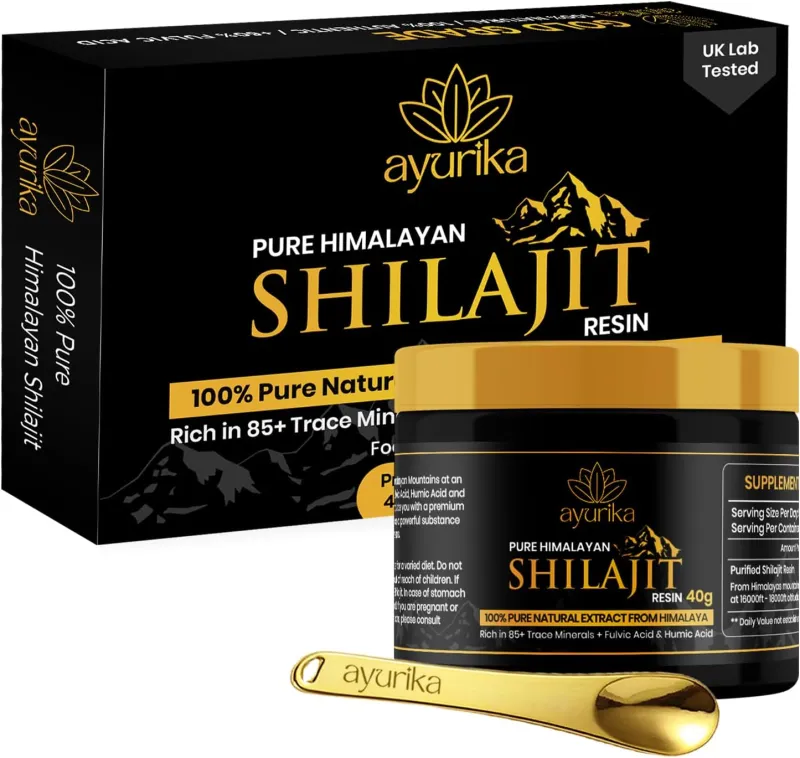
Photo: black shilajit resin on spoon next to dumbbells in gym, via m.media-amazon.com
Somewhere between my third set of squats last month, the guy on the platform next to me offered me a tiny scoop of black tar from a tin that looked like it belonged in a pirate movie. "Shilajit," he said, like that explained everything. "Replaces my pre-workout. Testosterone, bro."
I've been covering supplements long enough to know that when something becomes gym-bro canon, the marketing has usually lapped the science by several laps. So I did what any reasonable skeptic would do: I went down the research rabbit hole. Here's what I found — and what I actually think.
What Shilajit Actually Is
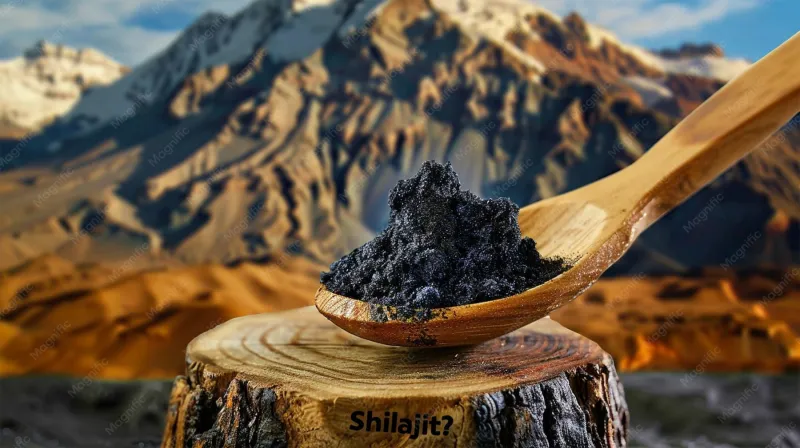
Quick primer for the uninitiated: shilajit is a sticky, mineral-rich resin that seeps from rocks in high mountain ranges, primarily the Himalayas. It forms over centuries from decomposed plant matter and contains fulvic acid, humic compounds, and trace minerals. It's been a fixture of Ayurvedic medicine for thousands of years, traditionally prescribed as a "rasayana" — a rejuvenating tonic.
Whether ancient reverence translates to modern gains is, of course, a different question.
The Testosterone Claims: Promising, But Thin
Let's start with the claim every lifter cares about. The most-cited study is a 90-day randomized trial in healthy men aged 45–55, published in Andrologia, which found that shilajit supplementation significantly increased total testosterone levels compared to placebo — roughly a 20% bump.
That sounds impressive until you zoom out. It's one study, in middle-aged men, in a country with different baseline health conditions, with a modest sample size. There's also a smaller trial showing shilajit improved sperm counts and motility in infertile men, which at least supports some effect on the male reproductive axis.
My honest read: there's a plausible mechanism and early positive signal, but "shilajit skyrockets your T" is a claim running about five miles ahead of the data. If you're a 28-year-old with normal testosterone, no study has shown meaningful benefit for you.
Energy and Fatigue: The Strongest Card in the Deck
Here's where shilajit's case is genuinely interesting. Multiple human studies — including research published in the Journal of the International Society of Sports Nutrition — suggest shilajit may help with fatigue and support muscle energy metabolism, possibly by enhancing mitochondrial function and aiding post-exercise adaptation.
One trial on chronic fatigue syndrome found notable reductions in fatigue scores versus placebo. Another suggested shilajit helped maintain muscle strength under fatiguing exercise conditions. For an Ayurvedic substance, that's a respectable research portfolio.
Does "supports mitochondrial energy" feel sexier than a 200mg caffeine scoop? No. Is it probably gentler on your adrenal system at 6 a.m.? Also no argument there.
Recovery: Interesting Theory, Early Evidence
The fulvic acid content is the theoretical hook here — it's an antioxidant and may influence inflammation pathways. Add in shilajit's trace mineral profile, and you get a plausible story about reduced oxidative stress after hard training.
Plausible, however, is doing a lot of work in that sentence. Direct human trials on shilajit and exercise recovery markers (DOMS, inflammatory cytokines post-training) are scarce. Most recovery claims are extrapolated from the compound's general properties. If someone tells you shilajit "cuts recovery time in half," ask them for the study. They won't have one.
So Should It Replace Your Pre-Workout?
Here's my take, for what it's worth.
If you're chasing the acute, tingling, tunnel-vision kick of a stim-heavy pre-workout, shilajit will disappoint you. It doesn't do that. It's not a stimulant, and comparing the two is comparing a slow simmer to a flash fire.
But as a long-game, daily supplement — something that might support energy metabolism, stress resilience, and possibly hormonal health over months — shilajit is one of the more defensible trends to come out of lifting culture in years. The safety profile in human trials looks good, the traditional use is deep, and the early research, while limited, points in a consistent direction.
A few practical notes if you try it:
- Buy resin or standardized extract, not powder capsules of unknown origin. Shilajit is heavily counterfeited (see our shilajit authenticity guide for home tests).
- Look for purified products — raw, unpurified shilajit can contain heavy metals.
- Give it 8–12 weeks before judging. This is a marathon supplement, not a shot of espresso.
- Talk to your doctor if you have iron overload conditions (hemochromatosis) — shilajit's mineral content matters there.
The Verdict
Shilajit isn't magic, and it isn't a scam either. It's a legitimately interesting traditional remedy with a small but encouraging evidence base and a whole lot of overzealous marketing riding on top of it. Swap out your pre-workout? Only if you don't miss the caffeine. Add it to your daily stack as a long-term play? That, the research can just about support.
My squat partner's tin stays in my gym bag's peripheral vision. I haven't taken the scoop yet. But I'm not ruling it out — and that, from me, is a decent review.