
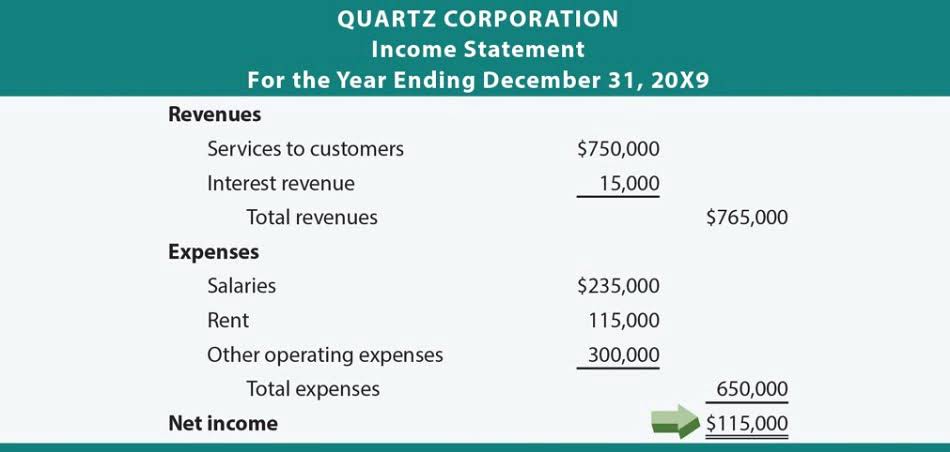
Income statements are also known as profit and loss (P&L) statements or earnings statements. It’s a critical financial statement that provides insight into a company’s financial performance, including revenue, expenses, and net income over an accounting period (usually a quarter or a year). Analysts and investors use income statements to evaluate how well a company generates earnings and pays off debt on time. This ratio is a type of financial analysis that provides valuable insight into a company’s financial health and its ability to cover interest expenses without financial stress. It is necessary to keep track of the ability of the entity to cover its interest expense because it gives an idea about the financial health. A high times interest earned ratio equation will indicate a good level of earnings that it more than the interest to be repaid.
What does a high times interest earned ratio mean for a company’s financial health?

As a result, TIE plays a pivotal role in financial analysis and decision-making, helping stakeholders assess the financial resilience and risk profile of a times interest earned ratio company. A higher times interest earned ratio means that the business is generating more earnings, or that the business has reduced total interest expense — or both. The Times Interest Earned (TIE) ratio plays a crucial role in corporate finance, impacting everything from funding strategies to the long-term financial health of a company.
Related terms

Among the myriad financial ratios available, the Times Interest Earned (TIE) Ratio stands out as a pivotal metric for investors and creditors alike. To better understand the TIE ratio, it’s helpful to look at what the TIE ratio means to a business. The TIE ratio provides a clear picture of how many times a company can cover its interest expenses with its operating profits. For example, if a company has an EBIT of $500,000 and an interest expense of $100,000, its TIE ratio would be 5. This means the company’s Bookkeeping for Startups operating profit is sufficient to cover its interest expenses five times over, indicating a healthy financial position.
- If the ratio is 3, for example, net debt is three times EBITDA.Reducing net debt and increasing EBITDA improves a company’s financial health.
- This includes a company’s financial statements, annual reports along with the stock’s performance report.
- Businesses consider the cost of capital for stock and debt and use that cost to make decisions.
- The resulting figure reflects the earnings generated solely from the core business activities, excluding any financial or tax-related considerations.
- EBIT is a fundamental component of the TIE ratio and represents a company’s operating profit before accounting for interest and taxes.
- Solvency ratios like TIE help assess a company’s ability to meet its long-term debt obligations.
How is the Times Interest Earned Ratio calculated?

The existence of a fiduciary duty does not prevent the rise of potential conflicts of interest. This article will teach you everything you need to know about the times interest earned ratio, including how to calculate it and the right way to interpret it. Conversely, a low TIE may indicate inefficiencies in the business model, prompting management to explore strategies for improving profitability and cost management.
- The times interest earned ratio is a financial metric that measures a company’s ability to meet its debt obligations, specifically the interest on its outstanding debt.
- It measures the number of times a company’s earnings before interest and taxes (EBIT) covers its interest expenses.
- It is necessary to keep track of the ability of the entity to cover its interest expense because it gives an idea about the financial health.
- A times interest earned ratio of more than 3 indicates that the company can meet its debt obligations while still being able to reinvest in itself for growth.
The more sources from which financial information is gathered, the more accurate it income summary will be. Cash basis accounting is a type of accounting that records income and expenses on a company’s balance sheet only when cash changes hands, instead of when the transaction first takes place. EBIT is used to analyze a company’s core business performance without deducting expenses that are influenced by unrelated factors like how it is financed or how much the company owes in taxes.
- The times interest earned ratio measures the ability of an organization to pay its debt obligations.
- This metric directly influences decisions on whether to fund operations or expansions through debt or equity.
- A company with consistent earnings is considered a better credit risk because the risk of potential cash flow problems and default is reduced.
- Understanding interest and taxes is crucial for calculating the times interest earned ratio and evaluating the company’s financial performance.
- Although a higher times interest earned ratio is favorable, it does not necessarily mean that a company is managing its debt repayments or its financial leverage in the most efficient way.
- The Times Interest Earned (TIE) Ratio plays a pivotal role in evaluating a company’s ability to meet its debt obligations.
